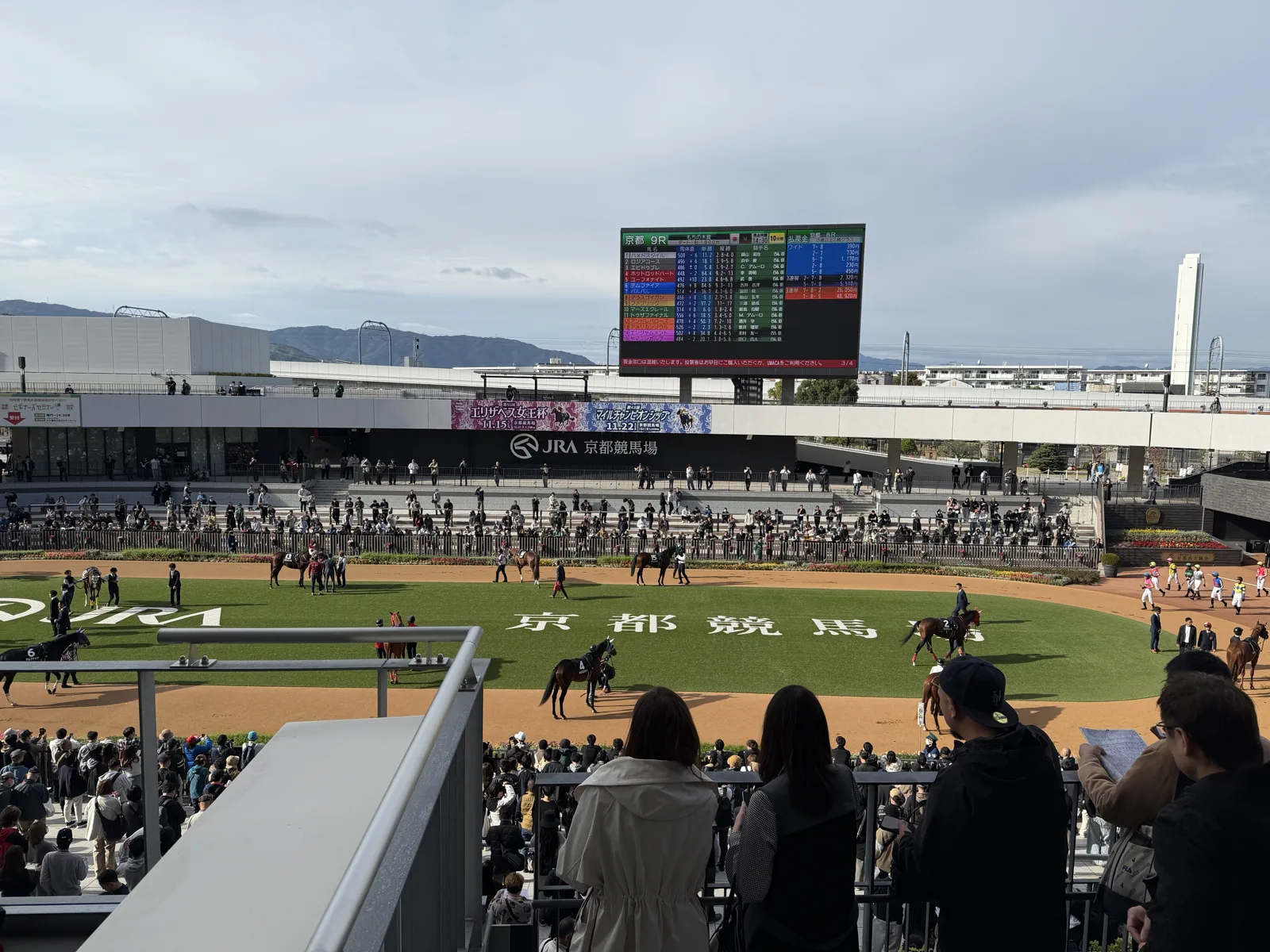
The paddock at Kyoto Racecourse, 8 November 2026. Photo: OsakaHacks
Quick answer
Yes, you can go to the horse races in Kansai without caring about gambling at all. Kyoto Racecourse (a short walk from Keihan Yodo Station) and Hanshin Racecourse (about 30 minutes from Umeda, then a short walk) are the two big JRA tracks. Entry is about ¥200, kids under 15 get in free, and both have play areas and food shops. If you want something more local and weekday-friendly, Sonoda (Amagasaki) charges only ¥100 and runs Friday night races in season. Betting is optional, starts at ¥100 and is only for ages 20 and over.
Say "horse racing" and many people picture smoky betting halls. JRA's own English guide describes its racecourses as large public parks, with playgrounds for children. Think of a day out with a very fast sport in the middle, and a bet only if you want one.
This guide covers the racecourses you can reach from Osaka and Kyoto, how to visit as a first-timer, and how a simple ¥100 bet works, if you are 20 or over and curious. Almost everything below was checked against official JRA and Hyogo Prefecture pages on 9 November 2026 (the few exceptions are flagged in the text). Prices and race days change, so check the official calendar before you go.
A note on opinions: where we say something is easy to reach, relaxed, clean, tasty, interesting or reasonably priced, that is our editor's impression after visiting Kyoto Racecourse on 8 November 2026. We have not yet visited Hanshin, Sonoda or Himeji for this article, so those sections stick to official information.
Why go to the races in Kansai?
- It's a day out, not just a betting venue. Kyoto and Hanshin both have play areas and park space for children.
- You can make a whole day of it. Kyoto has reserved seats from ¥400 on ordinary race days (admission included), which our editor found reasonably priced.
- You can eat and drink well. Kyoto's shops include kasu-udon, yakitori and takoyaki, plus a craft beer stand and a sake bar for adults. Our editor enjoyed the food and drink there.
- It's easy to reach by train. Both JRA tracks are on ordinary commuter lines, and JRA itself asks visitors to use trains and buses rather than drive.
- It's a window into Japanese culture. Racing has a long history in Japan, and our editor found the paddock one of the most interesting parts of the day, even without a bet.
Quick comparison
Racecourse | Nearest station | Entry (race days) | Best for |
|---|---|---|---|
Kyoto (JRA), Fushimi, Kyoto | Keihan Yodo Station, about 2 minutes on foot | ¥200 (¥500 on some big G1 days); free for under 15s | Families with young kids, first-timers, a stop after Kyoto sightseeing |
Hanshin (JRA), Takarazuka, Hyogo | Hankyu Nigawa Station, about 5 minutes on foot via an underpass | ¥200; free for under 15s | Families and couples staying in Osaka or Kobe |
Sonoda (local), Amagasaki, Hyogo | Hankyu Sonoda Station, then a free shuttle | ¥100 on race days | Weekday visits, Friday night races in season, budget outings |
Himeji (local), Himeji, Hyogo | JR / Sanyo Himeji Station, then a free shuttle | Free on race days (special seats extra) | Combining with Himeji Castle |
Kyoto and Hanshin alternate: JRA says they hold the same number of race meetings and take turns. As we write this (9 November 2026), Kyoto is racing from 7 to 29 November and Hanshin's next meeting starts on Saturday 5 December. Always check which track is running before you head out.
Kyoto Racecourse (JRA)
Where our editor went. Kyoto Racecourse was rebuilt and reopened on 22 April 2023. It has a large BørneLund-produced indoor play area and an outdoor park, so it is a natural choice for families.
Our editor's impression (visit on 8 November 2026). Our editor found Kyoto Racecourse a place where you can take your time, and where kids have plenty to play with. The grounds looked clean, and much cleaner than the editor remembers racecourses being in the past. There was good food and drink, access by train was easy, and the day was a way to learn a little about Japanese culture. These are one person's impressions from a single visit, not official information.
Getting there. Take the Keihan Main Line to Yodo Station. JRA's Japanese access page says the course is about a two-minute walk from the station. (An older English page says five minutes, so give yourself a little margin.) In our editor's opinion, it's easier to reach than Hanshin, because the station is so close to the course. The Keihan Main Line connects it with central Osaka and Kyoto (for example from Yodoyabashi or Sanjo). Not every train stops at Yodo, so check the train type in a transit app. Keihan has also run special trains for big race days in the past.
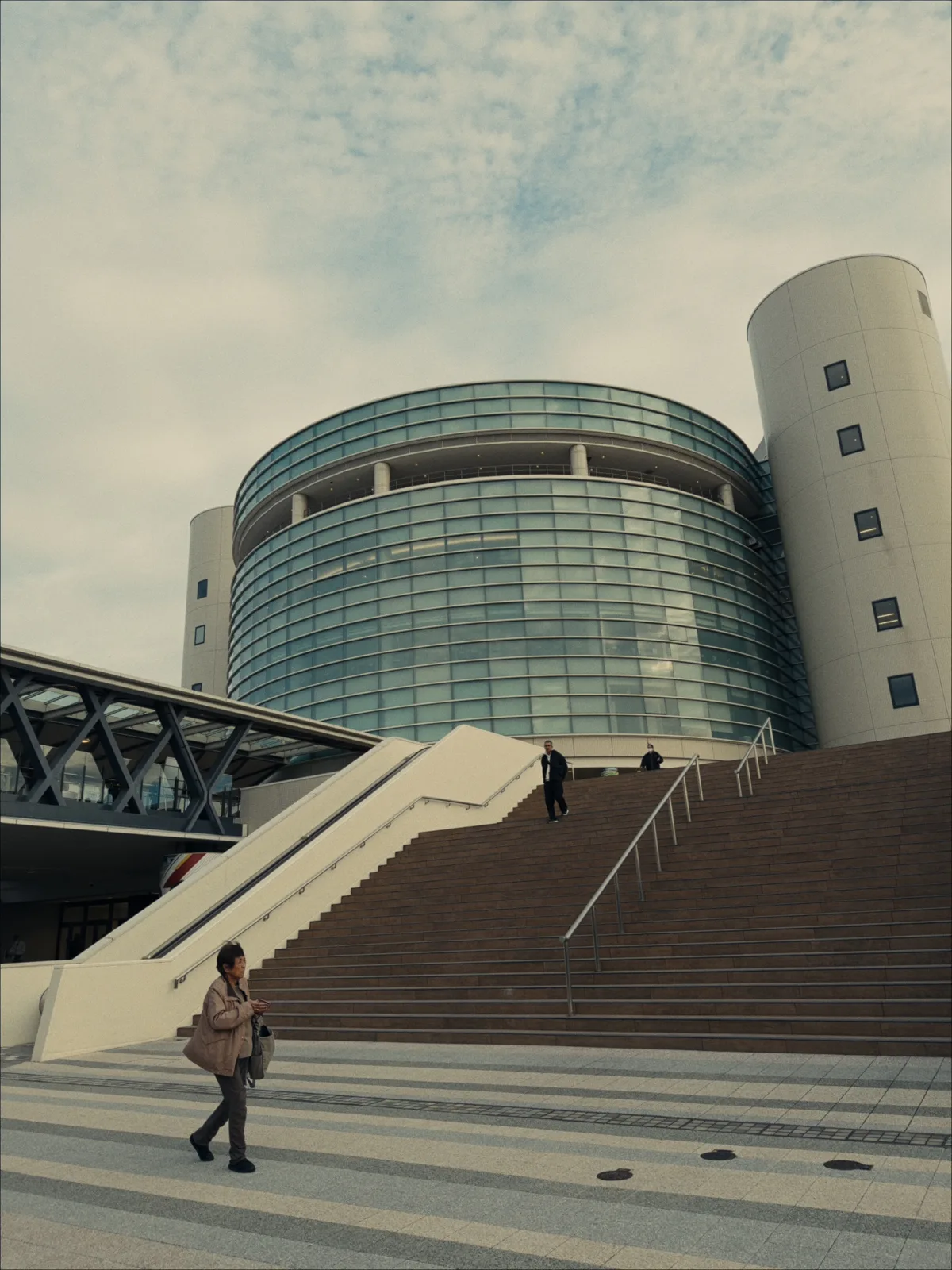
The grandstand entrance steps and round glass building at Kyoto Racecourse, seen from the Yodo Station side. Photo: OsakaHacks
Entry and seats. On Park Wins days, when Kyoto is used only for off-track betting, entry is free. As of autumn 2026, entry on live race days is ¥200 on ordinary race days, and ¥500 on the big G1 days (15 and 22 November are examples). Children under 15 are free. You can buy a cash ticket from machines at the gate (sales start at 9:20), or buy an advance ticket online (¥100 on ordinary days) through JRA's Japanese-language site. Same-day cash tickets are cash only. Reserved seats include admission. On ordinary autumn 2026 race days, the JRA price list shows outdoor "smart seats" from ¥400, private seats from ¥1,500, and B seats at ¥3,000. Prices are higher on G1 days. Online registration for reserved seats is for ages 20 and over.
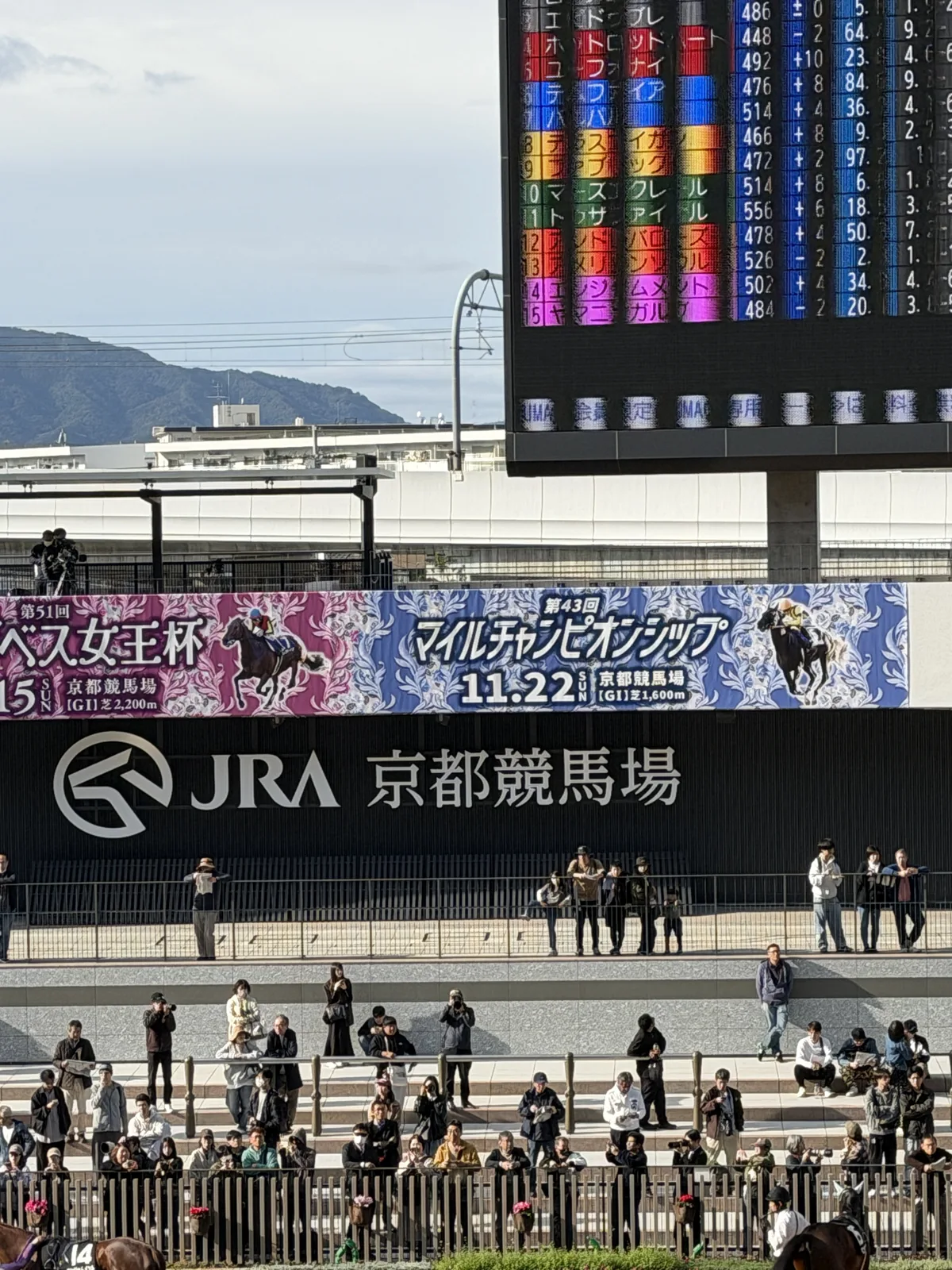
Banners at Kyoto Racecourse for the Queen Elizabeth II Cup (15 November) and the Mile Championship (22 November). Photo: OsakaHacks
For kids.
- Paka Run! is a large indoor play area produced by the play specialists BørneLund and operated by JRA. JRA's page describes about 100 pieces of play equipment in four areas. It's for children from 6 months to 12 years, it's free (race-day admission is separate), and sessions last 40 minutes. You reserve a slot through JRA's racecourse event app, and the venue may close on G1 days when crowds are heavy. It also opens on Park Wins days, when Kyoto is used only for off-track betting.
- Park area. A large outdoor play area with athletic equipment (ages 6 to 12) and a bouncy dome (ages 3 to elementary school) are in the grounds. A family room is open until 16:20. We have not tried these facilities ourselves.
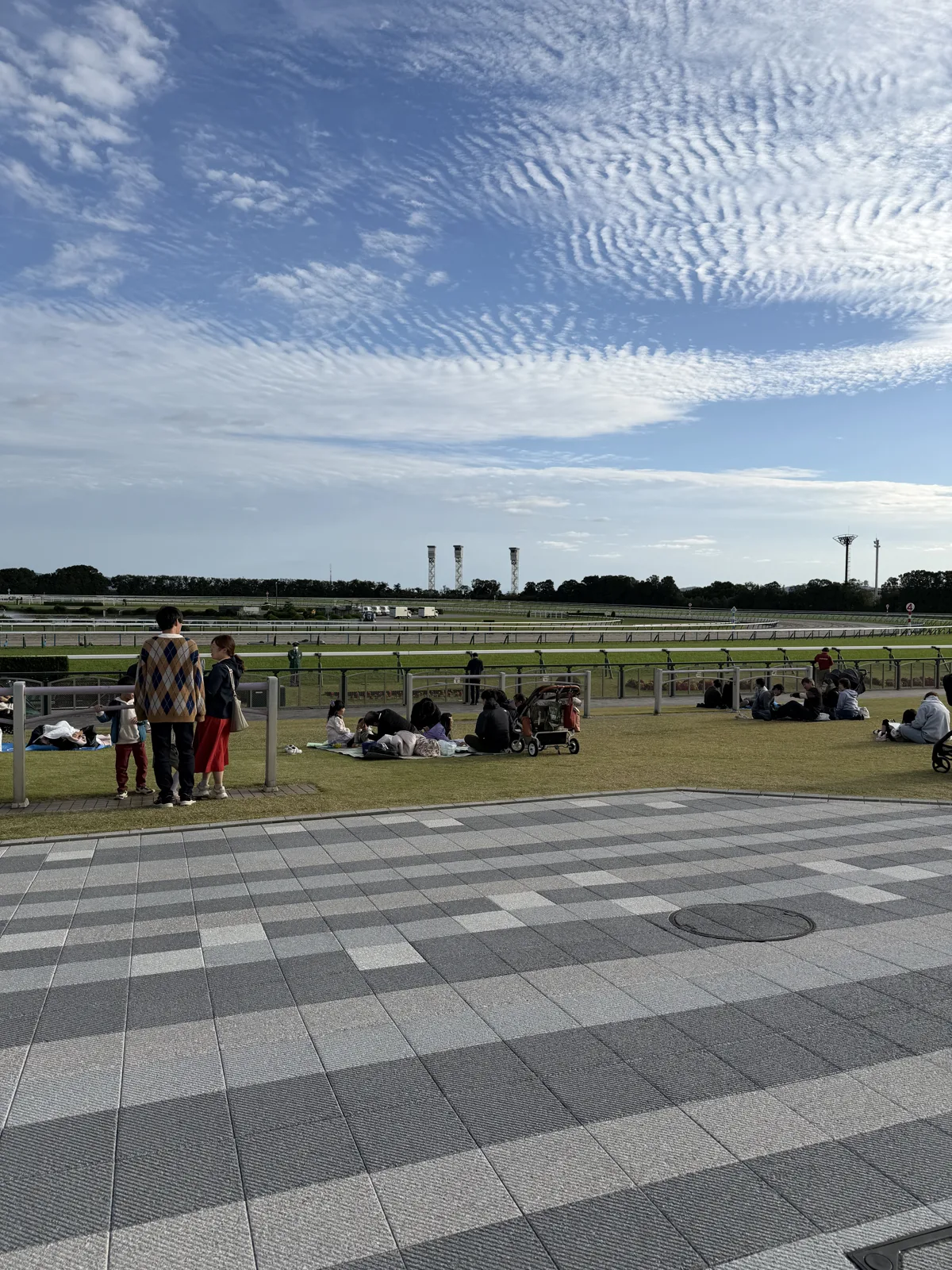
People relaxing on the lawn beside the track at Kyoto Racecourse. Photo: OsakaHacks
Paddock. From the second-floor paddock ring you can see the horses from 360 degrees. Our editor found it a great way to get a feel for the sport, and you don't need a betting ticket to enjoy it.
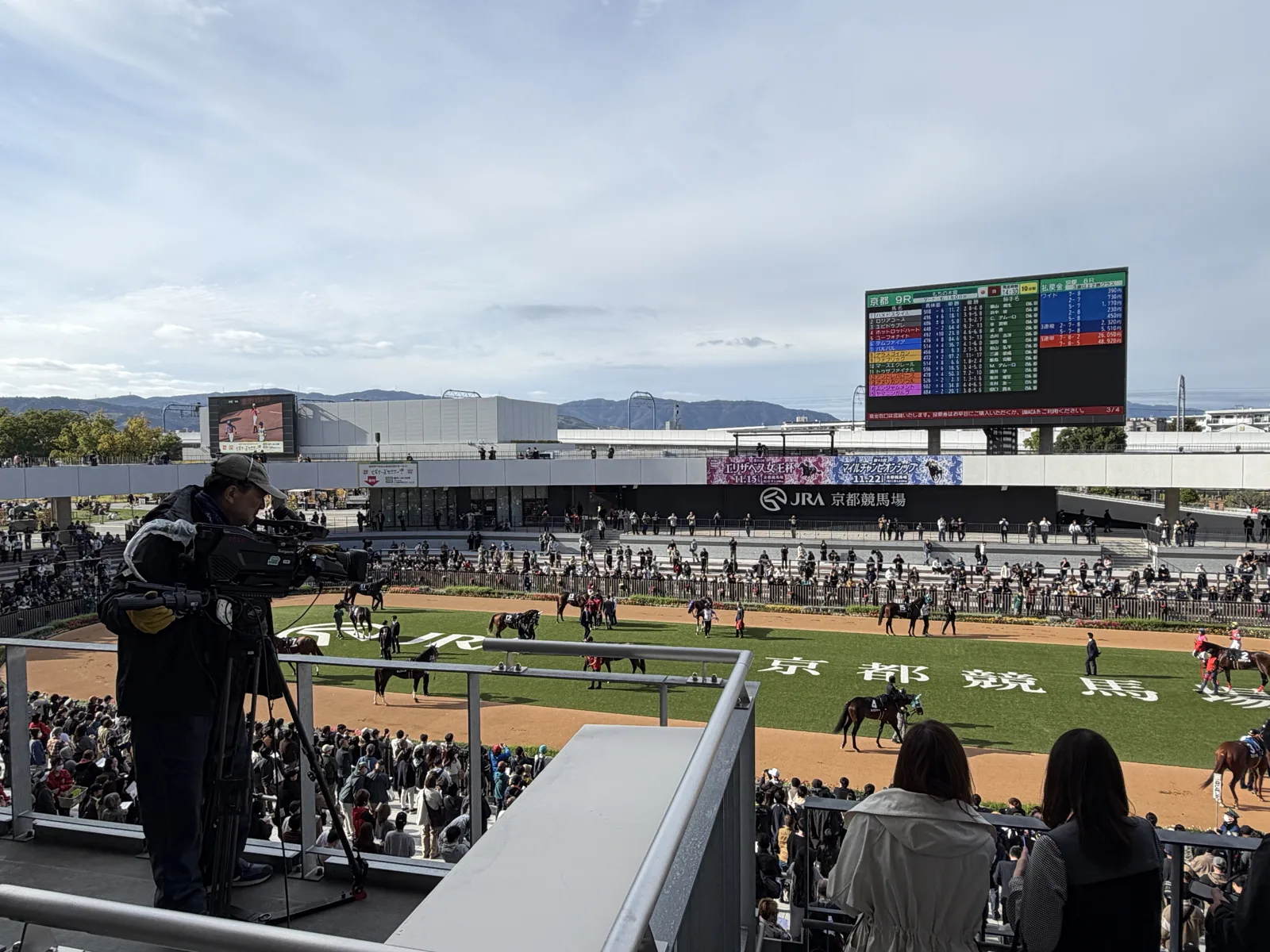
A camera operator at the paddock, with horses walking the ring below. Photo: OsakaHacks
Food and drink. The JRA restaurant guide lists kasu-udon, yakitori, takoyaki, gyoza and curry, plus a craft beer stand and a sake bar. Many shops accept cards or QR payments, and the guide marks which ones.
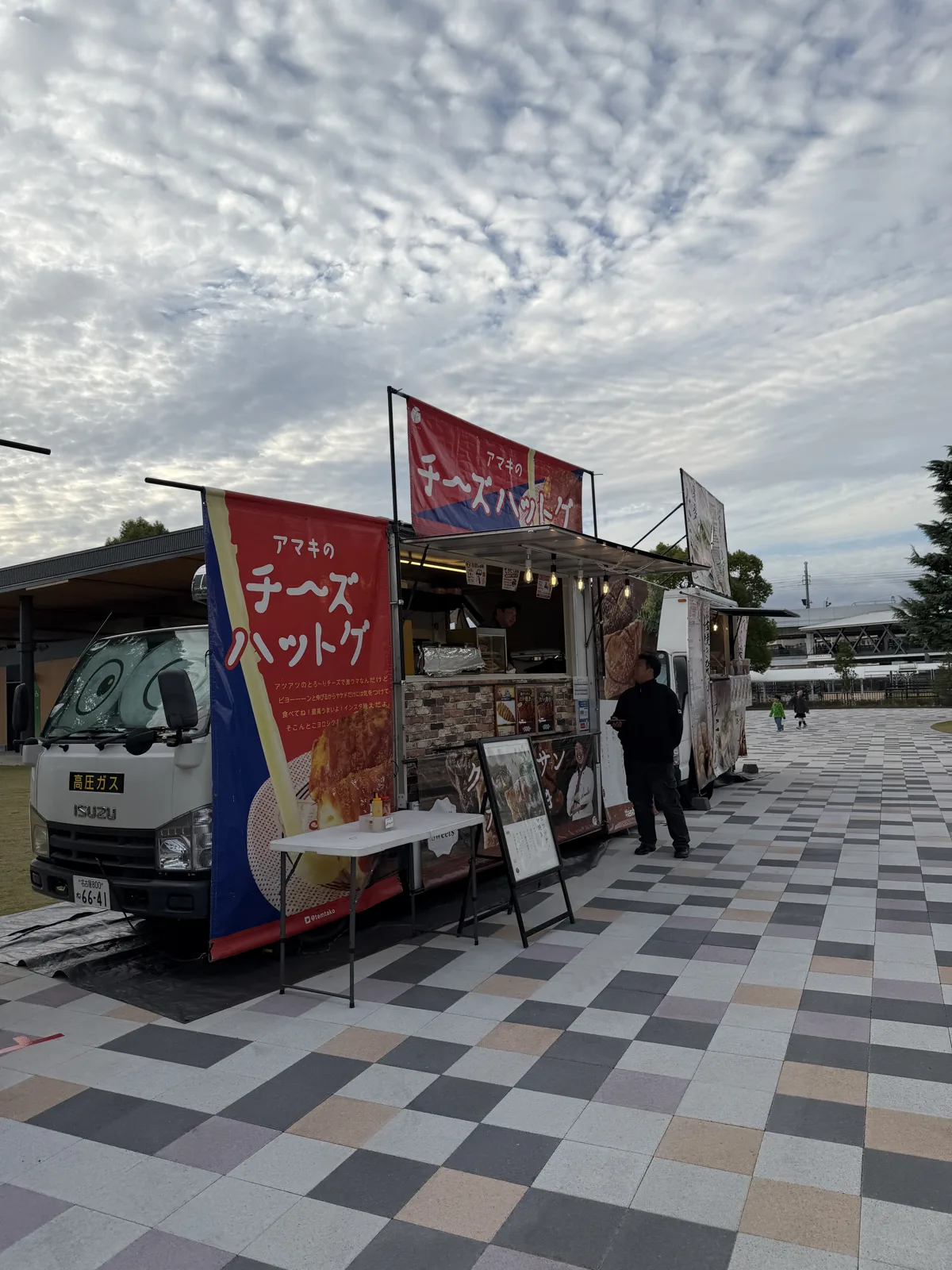
A food truck selling cheese hot dogs (チーズハットグ) on the plaza at Kyoto Racecourse on 8 November 2026. Photo: OsakaHacks
Easy add-on to sightseeing. If you're in Kyoto for temples, Kyoto Racecourse is an easy half-day add-on, since Keihan connects it with central Kyoto. On busy days, leaving a little before the last race may help you avoid the crowd at the station.
Hanshin Racecourse (JRA)
Getting there. Hanshin Racecourse is in Takarazuka, Hyogo, between Osaka and Kobe. JRA says it takes about 30 minutes from Hankyu Osaka-Umeda on the Hankyu Kobe Line (about 25 minutes from Kobe-Sannomiya). Change at Nishinomiya-Kitaguchi to the Imazu Line toward Takarazuka and get off at Nigawa. From there a dedicated underpass leads to the course in about five minutes on foot.
Entry and seats. Entry is ¥200 on race days, with under-15s free. On big G1 days the price can differ, so check the JRA page for that race day. Hanshin sells reserved seats in several categories (S lounge, A, B, C and others) through JRA's reservation system, which is in Japanese and requires registration. Children of elementary-school age and up need their own seat if they sit in a reserved area.
For kids.
- Asobiba! (あそび馬!). Like Kyoto, Hanshin has an indoor play area produced by BørneLund and run by JRA, with about 100 pieces of play equipment in three areas and a 35-metre indoor athletic net. JRA says reservations are made through its racecourse event app. There is also a kids' dining space. We could not confirm the age range, hours or price, so check JRA's page.
- Kids Garden. The outdoor park has a Mini Shinkansen ride (race days only) and water play in summer (this year, 20 April to 1 October). JRA's facility map also lists a bouncy dome and a pony corner.
- Free weekday opening. Outside race days, JRA opens the Kids Garden free of charge on weekdays (Monday to Thursday): this autumn, 7 September to 26 November, 9:00 to 17:00. Enter through the East Gate. Dates can change with the racing calendar, so check JRA's page first.
Big races. Hanshin's major races are the Takarazuka Kinen, the Osaka Hai, the Oka Sho, the Asahi Hai Futurity Stakes and the Hanshin Juvenile Fillies. These days are packed, so go early or choose a regular race day instead.
Food. The JRA tenant list for Hanshin includes kasu-udon, okonomiyaki, takoyaki, horumon (grilled offal), Korean dishes and a paddock-side cafe.
Sonoda and Himeji (local racing)
Japan also has regional racing run by local governments. In Kansai, the Hyogo Prefecture Racing Association runs Sonoda (Amagasaki) and Himeji. It races mainly on weekdays, for roughly 160 days a year, so this is the option when you want a quieter day.
Sonoda Racecourse
- Access: Hankyu Kobe Line Sonoda Station. A free shuttle bus runs from the station (the official page gives about 5 minutes). The English page still says it's a 20-minute walk and mentions a JR Amagasaki bus, but that bus service ended on 31 March 2026, so use the Hankyu route.
- Entry: ¥100 on race days. Free on days when only off-track betting is offered.
- Friday nights. Sonoda holds Friday night races in the warmer months. Press reports say the 2026 season ran from mid-May to 30 October, and the November calendar shows none, so check the calendar for next season. On night days the gates open at about 13:45.
- Kids. There's a kids' corner with play equipment, open only to visitors with children.
- Food. The racecourse lists 14 food shops.
- English. The official site has an English "How to Bet" page that explains Win, Show and Exacta bets step by step.
- Cashless. Sonoda offers a cashless betting card called DASH-pay, but the betting machines also take cash.
- Smoking. Smoking is allowed only in designated areas.
Himeji Racecourse
- Access: Take the free shuttle bus from the north side of JR / Sanyo Himeji Station (the stop is in front of the Resona Bank). Schedules depend on the number of races that day.
- Entry: Free on race days, with special paid seats.
- Notes: We could not find a children's play facility listed. Combine with Himeji Castle and treat the races as a bonus.
Going further: Chukyo Racecourse (Aichi) is part of the JRA, but it's in the Tokai region, not Kansai, so we've left it out.
Foreign visitors: the basics
- Age. You must be 20 or over to buy a betting ticket. JRA states this clearly.
- Language. JRA's racecourse pages are mostly Japanese. The Japan Racing website has English guides, and JRA's English guide says its racecourses have an information desk where you can pick up an English race program and a "How to Bet" leaflet for free. Sonoda has its own English betting guide.
- Cash and cards. Same-day gate tickets are cash only. At Kyoto, many food shops accept cards, e-money or QR, depending on the shop.
- Smoking. Reserved seats at Hanshin are non-smoking. Use designated smoking areas.
- Crowds. G1 days at Kyoto (for example, the Queen Elizabeth II Cup on 15 November and the Mile Championship on 22 November, 2026) sell advance online entry tickets (the first entry group is capped at 3,000 people), and kid facilities can close. If you're after a calm day, pick a regular race day.
- What to wear. JRA says there's no dress code. T-shirt and jeans are fine, and "smart casual" is preferred in reserved seats. Bring layers if you plan to sit outside.
- When to go. Gates open at about 9:00 (8:45 at Kyoto this autumn) and racing runs until late afternoon. Arrive in the morning if you want a reserved seat or a kids' play slot.
How to bet (beginner)
Betting is entirely optional, and you can have a good day without it. If you want to try:
- The minimum is ¥100. Every JRA bet type starts at ¥100 (a few off-track WINS outlets are the only exceptions).
- Pick a race and a horse. The race card (in English at the info desk) shows horse numbers.
- Fill in the mark card (the slip) or use a machine. Mark the course, race number, bet type, horse number(s) and amount. Sonoda's English page walks through an example.
- Pay and keep the ticket. Sales close about two minutes before post time, and refunds are not given after purchase.
- Collect winnings at the automated payout machines. Winning tickets stay valid for 60 days.
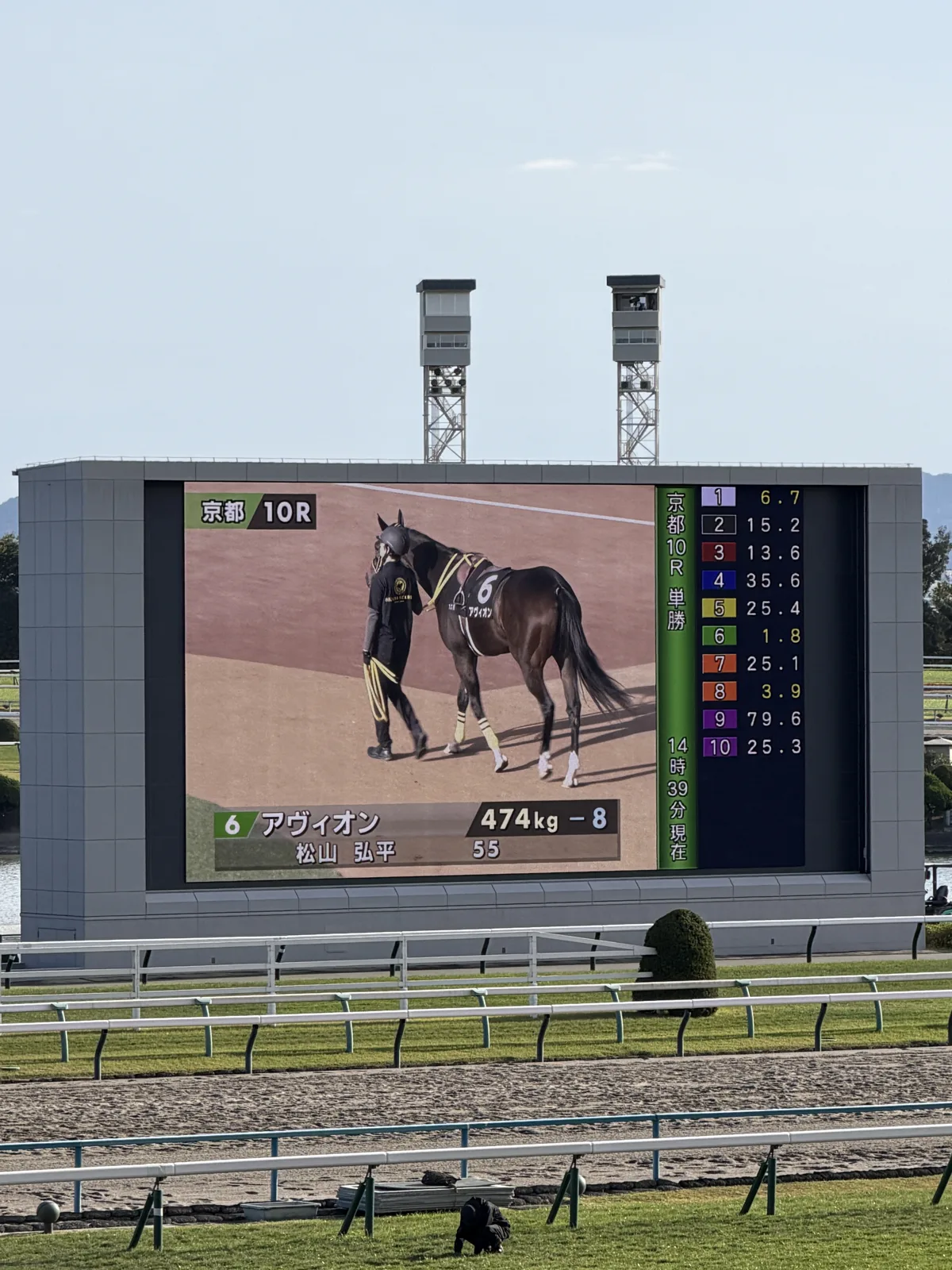
A big screen showing win odds for each horse number. Photo: OsakaHacks
Bet types in plain English:
Japanese | English | What you're picking |
|---|---|---|
単勝 | Win | The horse that finishes first |
複勝 | Place (called "Show" on Sonoda's site) | A horse that finishes in the top 3 (top 2 if 7 or fewer horses run) |
枠連 | Bracket Quinella | The two colour groups that finish 1st and 2nd, in either order |
馬連 | Quinella | The two horses that finish 1st and 2nd, in either order |
馬単 | Exacta | The first and second horses, in exact order |
ワイド | Wide | Two horses that both finish in the top 3 |
3連複 | Trio | The top three horses, in any order |
3連単 | Trifecta | The top three horses, in exact order |
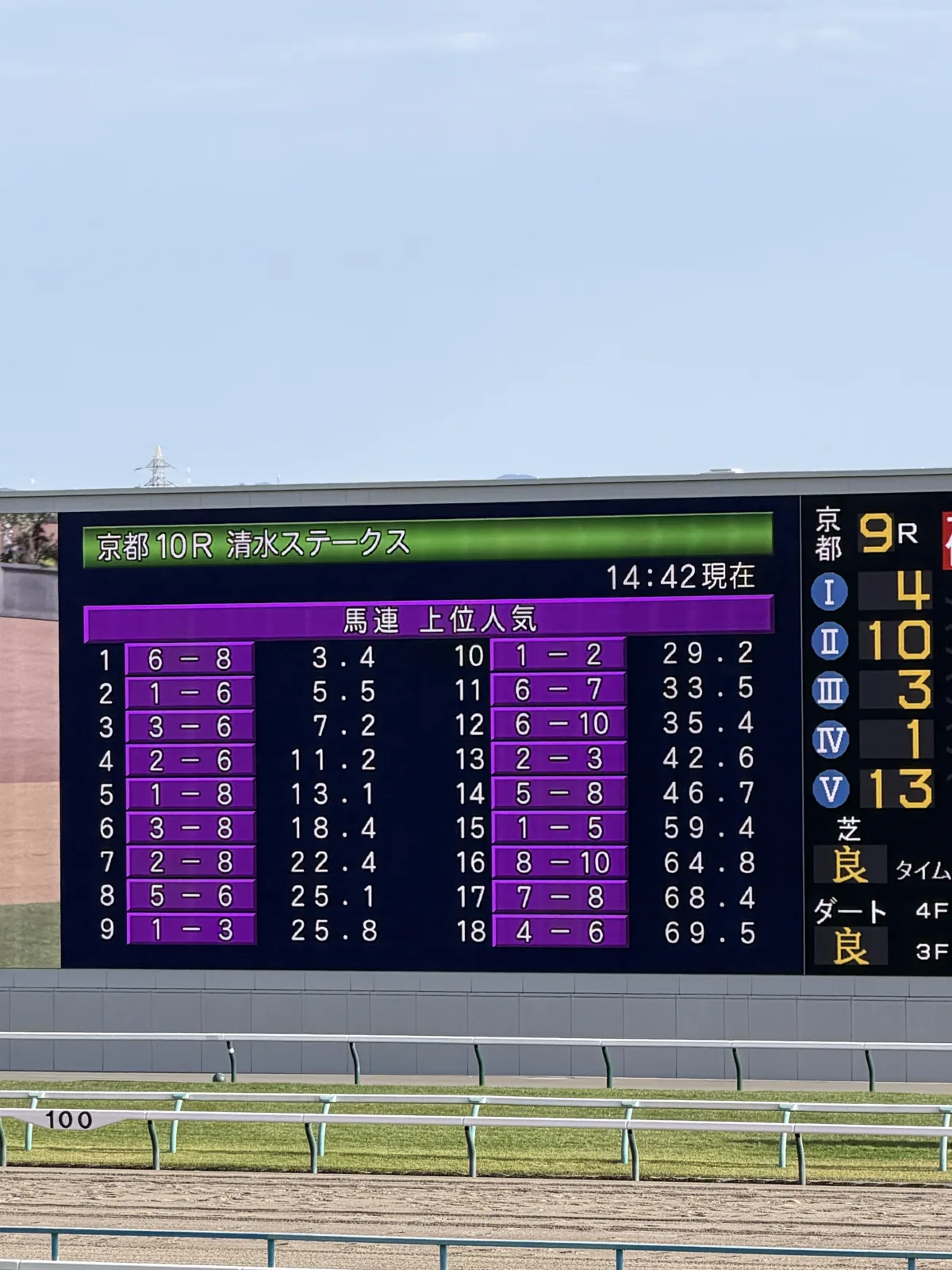
The quinella (馬連) popularity ranking on a big screen: pairs of horse numbers with their odds. Photo: OsakaHacks
A "Win" or "Place" bet is the easiest way to start. JRA also offers WIN5 (five races), but only online or via UMACA, not at the window.
A winning ticket is a nice bonus, but most bets lose, so treat any bet as the price of a fun race, not a way to make money. Please bet responsibly: only with money you can afford to lose, never with money meant for rent or travel, and stop if it stops being fun. If gambling is causing you stress or debt, talk to someone you trust or a local support service. Under-20s must not bet.
Tips for families
- Reserve Paka Run! (Kyoto) or Asobiba! (Hanshin) first thing. Reservations are made on the JRA racecourse event app. It runs on race days (and Park Wins days) at Kyoto, and may close on big G1 days.
- Go on a regular race day, not a G1 day. Entry is cheaper and the grounds are calmer.
- Think about a reserved seat. At Kyoto, a private seat (¥1,500 on ordinary autumn days) includes admission and gives you a guaranteed place to sit with kids and bags.
- Check what you can bring. Hanshin's Kids Garden page lists items that aren't allowed inside, including glass bottles, cans, pets, tents and large tables. Strollers and wheelchairs are fine. Check the rules for other courses too.
- Use the family spaces. Kyoto has a family room and Hanshin has a kids' dining space. Check JRA's facility map for details.
- Eat outside Paka Run! Food isn't allowed inside the play area.
- Stay with your children in the play areas and near the track.
- Try a weekday. Hanshin's Kids Garden is open free of charge Monday to Thursday outside race days (see the dates above), with no racing and no admission fee.
What to do on non-race days
Kyoto and Hanshin race on weekends (JRA's central racing is weekend-centered), and the courses are quiet in between. Options:
- Use Hanshin's free weekday Kids Garden, visit Kyoto on a Park Wins day (free entry, and Paka Run! is open), or combine Kyoto with the day trips in our day trips from Osaka guide.
- If you're staying in Osaka, indoor play areas in Osaka City work for wet weather, and the Osaka theme parks guide covers bigger days out.
- For a date night, try the romantic dating spots in Osaka or a craft beer crawl.
Planning your trip
If you're based in central Osaka, our guide to where to stay in Osaka helps you choose between Namba and Umeda. For getting around the city before you switch to Hankyu or Keihan, our Osaka Metro guide covers the subway basics.
FAQ
Do I have to bet to enter a Japanese racecourse?
No. You pay the entry fee (¥200 at JRA tracks, ¥100 at Sonoda) and can watch races, eat and use the play areas. Betting is optional.
How old do I have to be to bet?
20 or over. Children under 15 enter JRA racecourses free when accompanied by parents.
Is it OK to bring children?
Yes. JRA's English guide says there are playground areas for kids inside its racecourses, serving as a large "public park" for adults and their children. Kyoto's Paka Run! is for children from 6 months to 12 years, and Hanshin has a similar indoor play area (see above).
Can I use English?
Partly. JRA's own web pages for each course are mostly in Japanese, but you can get an English race program and a How to Bet leaflet at the information desk. Sonoda has English betting instructions on its website. A translation app helps.
What's the cheapest way to try it?
Sonoda (¥100 entry) or a JRA racecourse (¥200 entry, free for under-15s). At Kyoto, the cheapest reserved seats start at ¥400. You don't need to bet.
When are the races?
JRA races run on Saturdays and Sundays (and some holidays). Check the JRA calendar or the English schedule. Sonoda and Himeji race mainly on weekdays, with the calendar at sonoda-himeji.jp.