How to Use the Osaka Metro Complete Guide 2026: Master the Underground
Last updated: February 2026
Navigating a new city can be daunting, especially when you cannot read the signs, do not speak the language, and have just stepped off a fourteen-hour flight with jet lag clouding your judgment. But in Osaka, the key to the entire city lies beneath your feet, and it is remarkably easy to master. The Osaka Metro is more than just a transportation network; it is the circulatory system of the city, connecting the neon energy of Namba (難波) with the corporate sophistication of Umeda (梅田), the historic charm of Osaka Castle (大阪城), and the waterfront excitement of the bay area. Once you understand its logic, you can reach virtually any destination in the city within thirty minutes.
For Sarah, a 28-year-old American exploring Osaka for the first time, the metro quickly became her best friend. On her first morning, she stepped into Namba Station expecting the chaotic maze she had seen in YouTube videos about Tokyo's rush hour. Instead, she found herself in a clean, well-lit station with color-coded signs in both Japanese and English, helpful staff who gestured her toward the correct platform, and a train that arrived exactly—to the second—when the digital display said it would. By the end of her first day, she was navigating the system with the confidence of a local, tapping her phone at the gate and knowing exactly which exit number would deposit her closest to her destination.
Japan's railway system is legendary for its punctuality, cleanliness, and safety, and the Osaka Metro is no exception. In 2026, the system has become even more user-friendly with the full integration of mobile IC cards, expanded English-language support at every station, and real-time delay notifications available through the official app. Whether you are heading to a hidden ramen shop in Fukushima, catching a Shinkansen at Shin-Osaka, or exploring the temples of Tennoji, mastering the "Underground" is the first step to becoming a true Osaka insider.
In this comprehensive 2026 guide, we will walk you through everything you need to know: from understanding the color-coded lines to choosing the best discount passes for your itinerary.
Osaka Metro at a Glance: The 2026 Grid
Source: https://www.japan-experience.com/
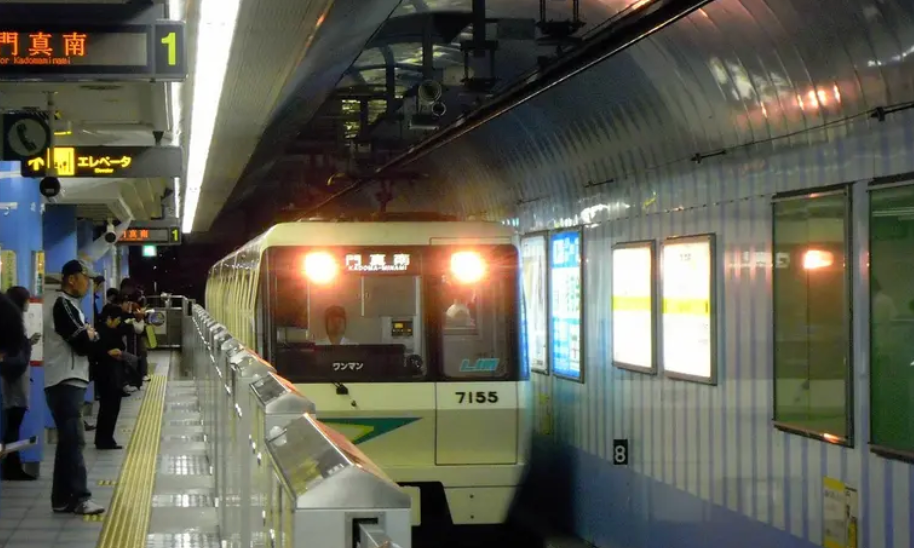
The Osaka Metro system consists of 9 lines spanning over 130 stations. Unlike the notoriously complex "spaghetti" network of Tokyo, where lines twist, overlap, and run in seemingly random directions, Osaka's system is designed in a remarkably efficient grid pattern. Most lines run either north-to-south or east-to-west, intersecting at predictable points. This grid structure means that you can usually reach any station in the system with at most one transfer, and the transfer stations are clearly marked with connecting signs.
The system is operated by Osaka Metro Co., Ltd., which took over from the city government in 2018, making it Japan's largest private subway company. The privatization brought a wave of modernization: station renovations, improved signage, new ticket gates with wider openings for wheelchair access, and the installation of platform screen doors on the busiest lines to prevent accidents.
Reliability and Frequency
The trains generally run from 5:00 AM until midnight, with the last trains departing between 11:30 PM and midnight depending on the line and direction. During rush hours (roughly 7:30 AM to 9:30 AM), trains on the major lines arrive every 2 to 3 minutes—you will barely have time to check your phone before the next one pulls in. Even during the quietest hours of the day, such as mid-afternoon on a weekday, you will rarely wait more than 7 minutes. For Sarah, this means she can essentially forget about timetables. The metro is so frequent that you simply show up at the station, descend to the platform, and go.
One critical note for late-night travelers: unlike some European cities where metros run past midnight on weekends, Osaka Metro stops before midnight every night, including Saturdays and holidays. If you are out enjoying Osaka's famous nightlife in Namba or Shinsaibashi, keep an eye on the clock. Missing the last train means either an expensive taxi ride (expect 3,000 to 5,000 yen for most routes) or a night at a manga cafe or capsule hotel until the first trains resume around 5:00 AM.
Understanding the Metro Lines: The Color-Coded Arteries
Source: https://qrtranslator.com/0000001696/000032/
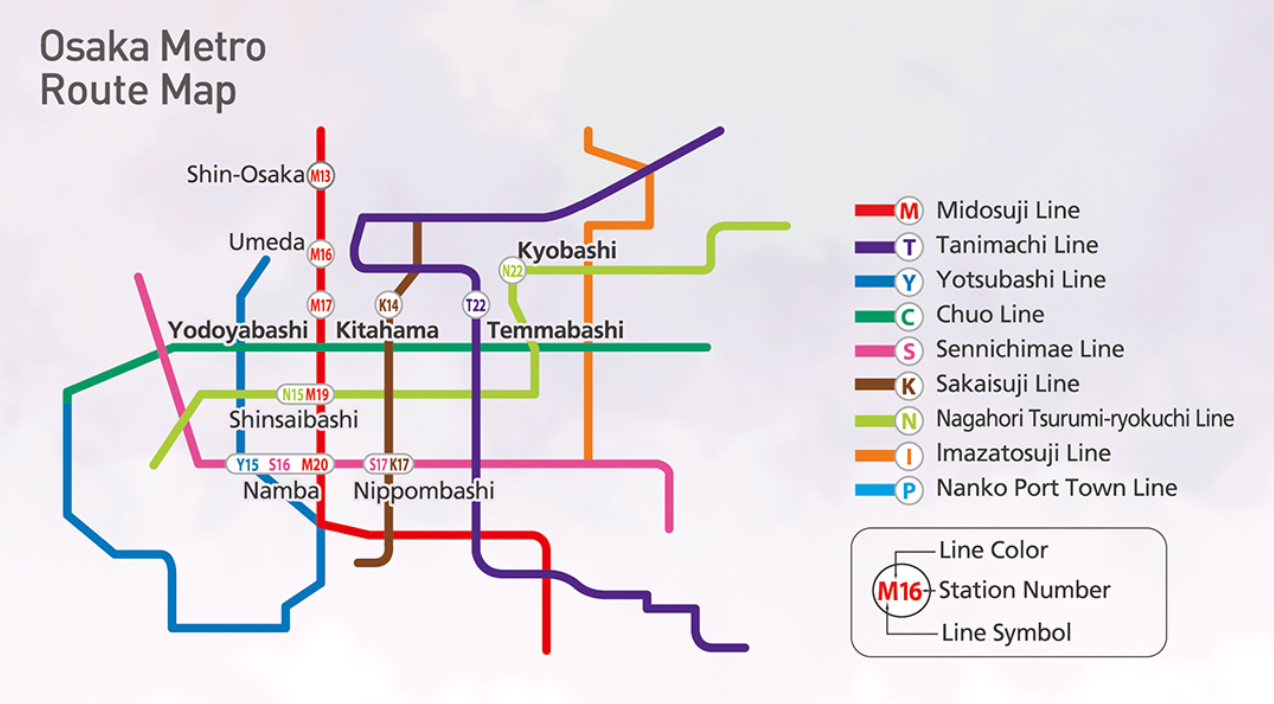
Each line in Osaka has a specific name, a representative color, and a single-letter abbreviation. Every station on a given line is also assigned a number (for example, M20 for Namba on the Midosuji Line). Memorizing the colors and letter codes is the fastest way to navigate, and within a day or two, you will find yourself thinking in colors rather than names.
1. Midosuji Line (Red — M): The King of Lines
This is the most important line for both tourists and commuters, and if you only learn one line, make it this one. The Midosuji Line runs north-to-south through the absolute center of the city, connecting the three major hubs: Shin-Osaka (where the Shinkansen stops), Umeda (the northern business and shopping district), Shinsaibashi (the fashion heartland), Namba (the entertainment and food capital), and Tennoji (the gateway to southern Osaka and the Abeno Harukas observation deck).
For Sarah, the Midosuji Line is the backbone of her Osaka itinerary. She can start her morning at Shin-Osaka, catch a Shinkansen to Kyoto for a day trip, return by evening, and be in the middle of Dotonbori's neon-lit streets within ten minutes. The line runs so frequently during the day that she never needs to plan around it—she simply walks to the nearest Midosuji station and knows a train will arrive within minutes.
The Midosuji Line is also the most crowded, particularly during the morning rush. If possible, avoid the stretch between Umeda and Namba between 8:00 AM and 9:00 AM unless you enjoy the uniquely Japanese experience of being gently compressed into a train car by white-gloved station attendants.
2. Tanimachi Line (Purple — T): The History Line
Running roughly parallel to the Midosuji but slightly to the east, the Tanimachi Line is the traveler's secret weapon for visiting Osaka's historic sites without fighting the Midosuji crowds. The line passes through Tenmabashi (where the river views are spectacular and the Tenma Tenjin shrine hosts one of Japan's oldest festivals), Tanimachi 4-chome (the closest station to Osaka Castle), and Shitennoji-mae Yuhigaoka (home to Shitennoji, one of Japan's oldest Buddhist temples, founded in 593 AD).
For Sarah exploring the cultural side of Osaka, the Tanimachi Line offers a quieter, less touristy experience. The stations are smaller and less overwhelming than the major Midosuji hubs, and the neighborhoods around them tend to have a more local, residential character that makes for excellent wandering.
3. Chuo Line (Green — C): The East-West Connector
The Chuo Line runs east-to-west across the city, connecting the central business district at Honmachi with the waterfront attractions of the bay area. In 2026, this line has taken on new significance thanks to its connection to the Yumeshima area, site of Expo 2025, which has since been developed into a major entertainment and innovation district.
The key stops include Honmachi (the business center, where the Chuo Line intersects with the Midosuji Line), Osakako (home to the famous Osaka Aquarium Kaiyukan), and Cosmosquare (gateway to the bay area). For Sarah, the Chuo Line is essential for her "Aquarium Day," as the Kaiyukan remains one of the world's best aquariums and a highlight of any Osaka visit.
4. Sakaisuji Line (Brown — K): The Foodie Express
The Sakaisuji Line is a favorite for those whose travel priorities revolve around eating. It runs through the famous Nipponbashi area (Osaka's electronics and otaku district, sometimes called "Den Den Town"), past the legendary Kuromon Market (the "Kitchen of Osaka," where you can eat fresh sashimi for breakfast), and connects to the southern suburbs. This line also provides a direct connection to Hankyu Railway services toward northern Osaka and Kyoto, making it a useful alternative to the more crowded Midosuji Line for day trips.
Other Notable Lines
The Yotsubashi Line (Blue — Y) runs parallel to the Midosuji and serves as a less crowded alternative for reaching Namba from the north. The Nagahori Tsurumi-ryokuchi Line (Light Green — N) is useful for reaching the eastern suburbs and Tsurumi-ryokuchi Park, a beautiful green space that hosted the 1990 International Garden and Greenery Exposition. The Sennichimae Line (Pink — S) connects Namba with the eastern parts of the city. The Imazatosuji Line (Orange — I) and New Tram (Light Blue — P) round out the system, serving specific neighborhoods and the bay area respectively.
How to Pay for Your Ride in 2026
1. IC Cards (ICOCA / Suica) — The Recommended Option
Source: https://att-japan.net/en/ic-card/
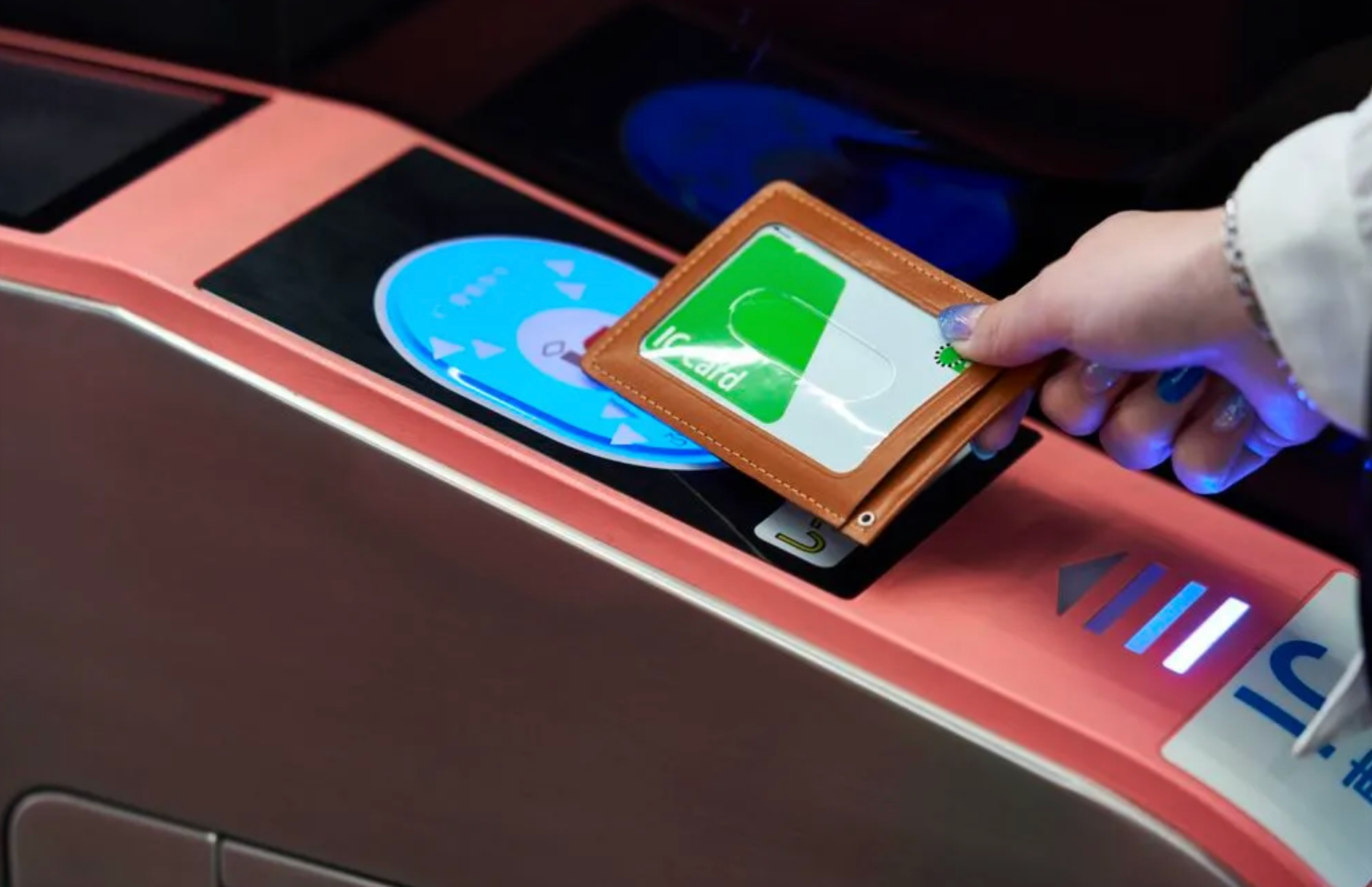
The simplest and most convenient way to ride the Osaka Metro is with an IC card. The local variety is called ICOCA (a clever pun: it sounds like "Ikoka," Osaka dialect for "Shall we go?"), but any major Japanese IC card—Suica, Pasmo, Kitaca, and others—works perfectly on all Osaka Metro lines.
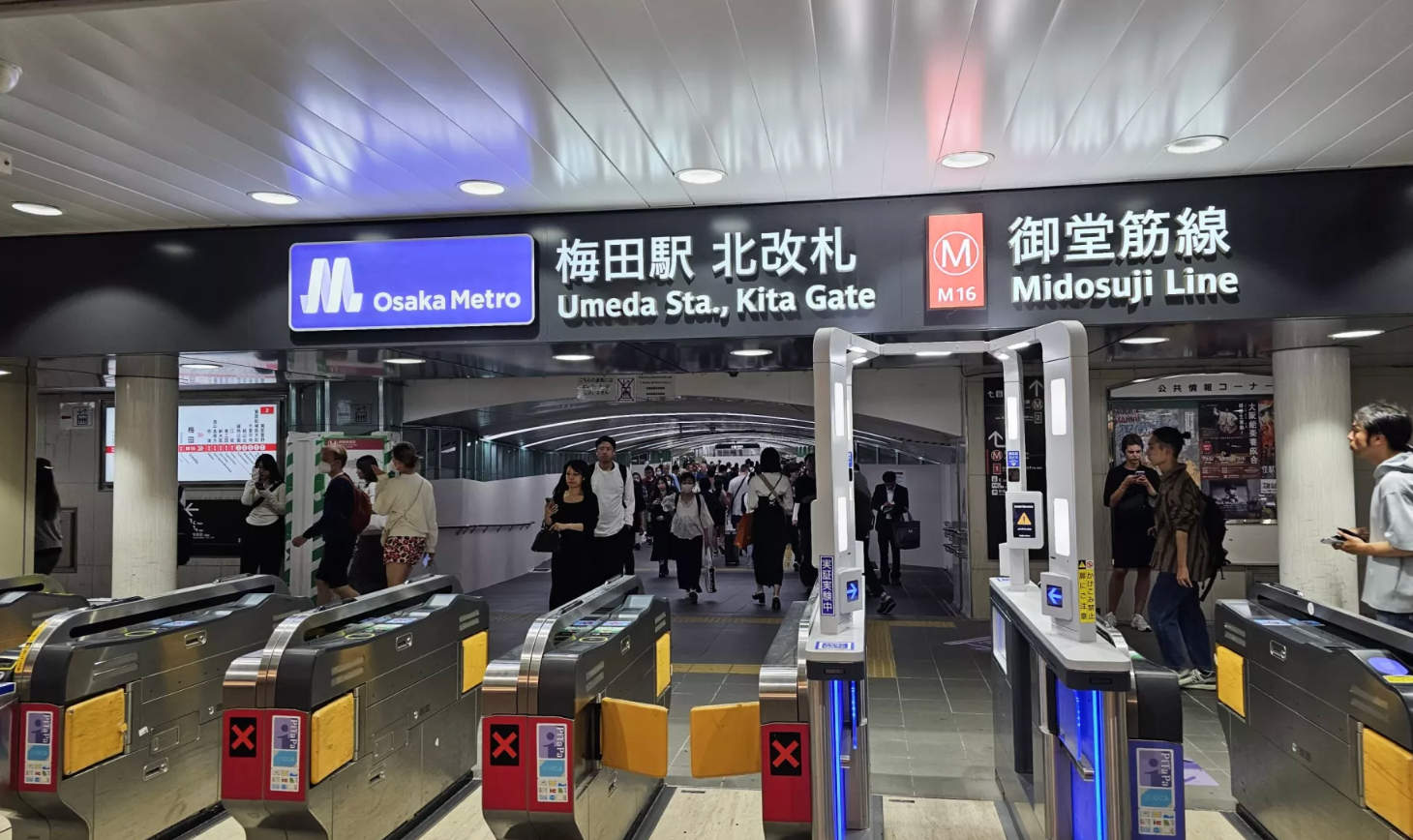
The way it works is beautifully simple. You load money onto your card (at any station ticket machine, most convenience stores, or through the mobile app), then tap the card on the blue IC sensor at the ticket gate when you enter a station. When you exit at your destination, you tap again, and the system automatically calculates and deducts the correct fare. No need to study fare charts, buy individual tickets, or calculate anything.
In 2026, the mobile IC card has become the dominant payment method among younger travelers. You can add an ICOCA or Suica card directly to your Apple Wallet (iPhone) or Google Pay (Android), turning your phone into your transit pass. For Sarah, this means one less physical card to carry—she simply holds her phone near the sensor and walks through the gate in a single fluid motion. The mobile card can be topped up instantly from a linked credit card, so there is never a need to visit a ticket machine.
One important note: as of 2026, there have been periodic shortages of physical IC cards due to global semiconductor supply issues. If you cannot find a physical ICOCA card at the airport or station, the mobile option is the best alternative. Alternatively, most stations still sell single-journey paper tickets from the vending machines.
2. Tourist Discount Passes
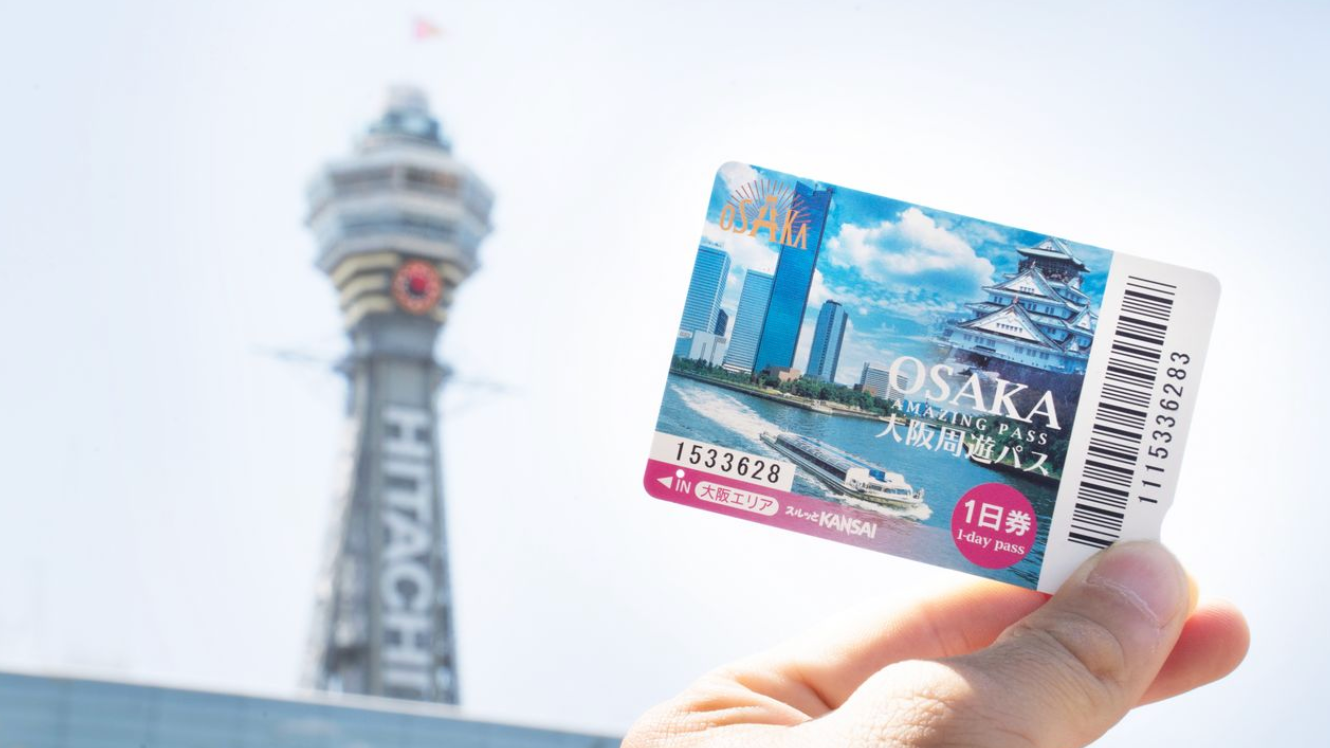
If you plan on taking the metro more than four times in one day—which is easy to do when you are exploring multiple neighborhoods—a day pass will save you a significant amount of money.
Enjoy Eco Card (820 yen weekdays / 620 yen weekends and holidays). This is the workhorse pass for budget-conscious travelers. It provides unlimited rides on all Osaka Metro lines and city buses for one calendar day. Since a single metro ride typically costs between 180 and 380 yen depending on distance, the pass pays for itself after just three or four rides. Sarah found that on days when she was exploring multiple areas—morning in Tennoji, afternoon in Umeda, evening in Namba—the Enjoy Eco Card saved her roughly 500 yen compared to individual fares.
Osaka Amazing Pass (2,800 yen for 1 day / 3,600 yen for 2 days). This premium pass combines unlimited metro rides with free entry to over 40 top attractions, including Osaka Castle, the Umeda Sky Building observation deck, Shitennoji Temple, and several river cruises. The 2-day version is particularly good value if you plan on visiting multiple paid attractions. Note that the 2-day version does not include private railways (Hankyu, Hanshin, Kintetsu), only Osaka Metro and city buses.
ICOCA with Kansai One Pass (3,000 yen deposit-based). This is an IC card specifically designed for foreign tourists, offering discounts at various shops and attractions throughout the Kansai region. It functions exactly like a regular ICOCA card but includes special tourist benefits.
Step-by-Step: Riding Like a Local
For Sarah's first solo ride on the Osaka Metro, here is exactly what the experience looks like, from street level to destination.
Step 1: Finding the Entrance. Look for the Osaka Metro logo—a stylized "M" inside a circle—or follow the blue and white directional signs that are posted at major intersections near every station. In busy areas like Namba and Umeda, you will find multiple entrances spread across several city blocks. Each entrance is numbered, and these numbers correspond to specific platforms and exits, so choosing the right entrance can save you considerable walking underground.
Step 2: Entering the Station. Descend the stairs or escalator to the ticket gate level. If you are using an IC card or mobile payment, simply tap your card or phone on the blue sensor and walk through. The gates open automatically. If you are using a paper ticket, insert it into the slot on the right side of the gate, walk through, and collect it from the slot on the other side. Keep your ticket—you will need it to exit.
Step 3: Finding Your Platform. Follow the color-coded signs for your line. Each platform has digital displays showing the destination, the number of minutes until the next train, and the number of cars. The displays are bilingual (Japanese and English), so Sarah can easily confirm she is on the correct platform heading in the right direction.
Step 4: Boarding the Train. Wait behind the yellow tactile paving (braided line) on the platform edge. When the train arrives, let all exiting passengers off before boarding—this is not just etiquette but genuine practical efficiency, as the doors remain open for only about 20 seconds at most stations. Once on board, move toward the center of the car if it is crowded. On the Midosuji Line during morning rush hours (approximately 7:30 AM to 9:00 AM), watch for designated "Women-Only Cars" marked with pink signs and floor stickers. These are reserved for female passengers and are located at one end of the train.
Step 5: Transferring Between Lines. If your journey requires a transfer, follow the overhead signs at your transfer station. The signs use the color and letter code of each line, making it easy to navigate even without reading Japanese. Transfer walks typically take between 2 and 5 minutes, though some large stations like Namba and Umeda can involve longer walks of up to 10 minutes between distant platforms.
Step 6: Exiting the Station. Before leaving the platform area, look for the yellow directional signs listing the Exit Numbers. Each exit corresponds to a specific above-ground location, and choosing the right exit can save you a 10-minute walk in the wrong direction. Major stations have exit maps posted on the platform walls, and the official Osaka Metro app provides detailed exit information for every station.
Metro Etiquette: The Unwritten Rules
Source: https://www.cestee.com/destination/japan/osaka/metro
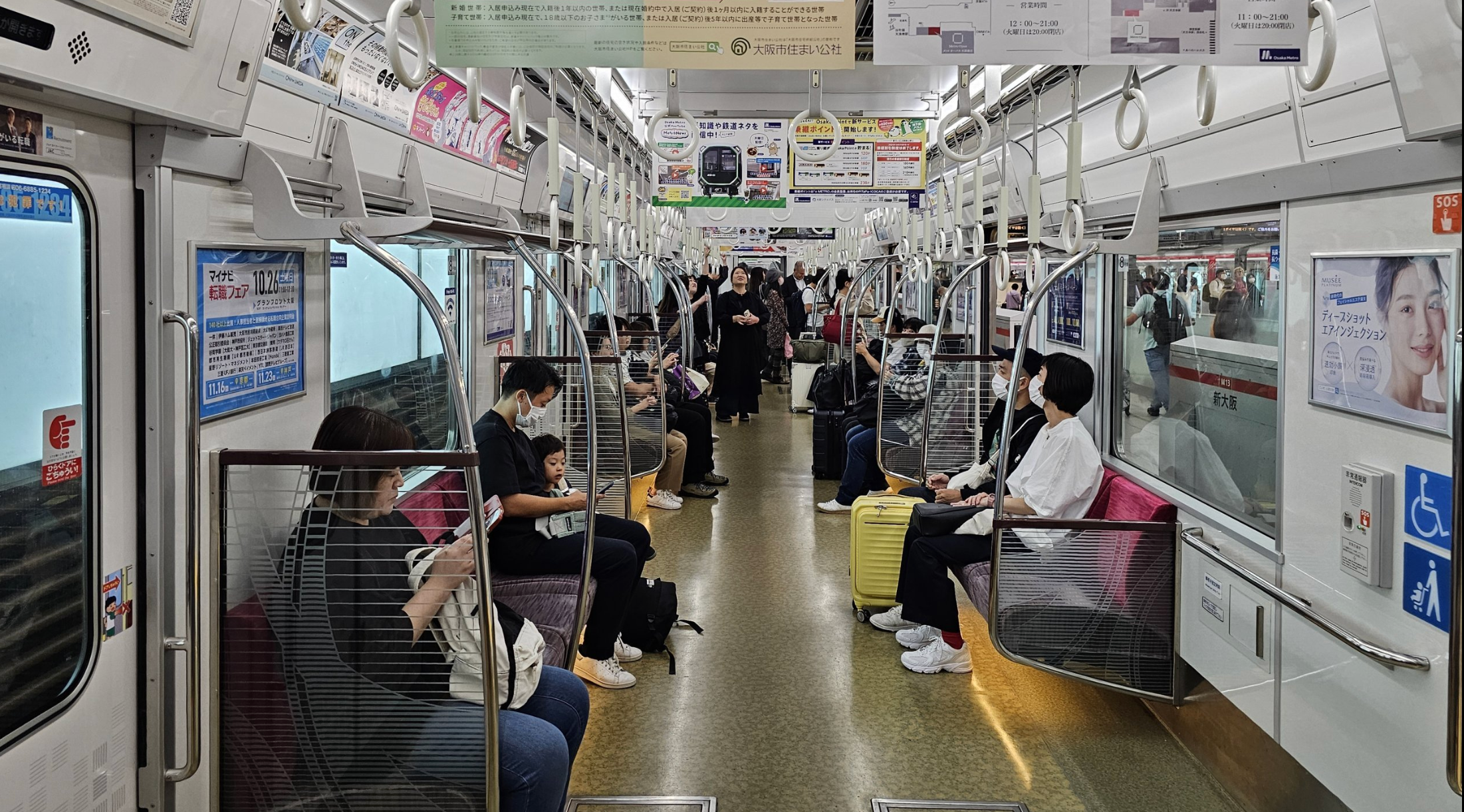
Japanese public transportation operates on a set of unwritten social rules that, while not legally enforced, are universally observed. For Sarah, following these rules is an easy way to show cultural awareness and avoid uncomfortable situations.
The Backpack Rule. If the train is crowded, hold your backpack in front of you or place it on the floor between your feet. Wearing a backpack on your back in a crowded car takes up significant space and can bump into other passengers. You will notice that Japanese commuters either carry their bags in front or hold them at their sides.
The Silence Rule. Talking on your phone inside the train is considered extremely impolite. Most passengers either read, sleep, or scroll their phones in silence. Conversations between friends are acceptable but should be kept at a low volume. If you need to take an urgent call, step off at the next station and handle it on the platform.
The Escalator Rule. In Osaka, stand on the right side of the escalator and walk on the left. This is the opposite of Tokyo (where you stand on the left), and it catches many visitors off guard. There is an ongoing national campaign to encourage people to stand on both sides for safety, but in practice, the right-standing convention is still deeply ingrained in Osaka.
The Priority Seat Rule. Every train car has designated priority seats (usually marked with a different color, typically green or grey) near the doors. These are intended for elderly passengers, pregnant women, people with disabilities, and passengers with small children. While anyone can sit in them when the car is not crowded, you should always offer your seat if someone who needs it more boards the train.
Eating and Drinking. Unlike some other transit systems, eating on the Osaka Metro is not officially prohibited but is generally avoided. Drinking water from a bottle is acceptable, but eating a bento box or snack is considered inconsiderate due to the smell and crumbs. Save your meals for above ground.
Connecting Beyond the Metro: JR and Private Railways
Source: https://www.cestee.com/destination/japan/osaka/metro
The Osaka Metro does not exist in isolation. The city's transit ecosystem includes several other rail systems that serve different purposes, and understanding how they connect to the metro is essential for making the most of your time.
JR West (Japan Railways). The JR Osaka Loop Line circles the city and connects to long-distance services including the Shinkansen at Shin-Osaka. The Loop Line is particularly useful for reaching Osaka Station (adjacent to Umeda), Tennoji, and Nishi-Kujo (for Universal Studios Japan). JR trains accept IC cards but are not covered by Osaka Metro day passes. If you hold a Japan Rail Pass, the JR lines are your free ticket to mobility, but you will still need to pay separately for metro rides.
Private Railways. Several private railway companies connect Osaka to surrounding cities: Nankai runs from Namba to Kansai Airport and the pilgrimage site of Mount Koya. Kintetsu connects Namba to Nara and the Ise Shrine area. Hankyu links Umeda to Kyoto, Kobe, and Takarazuka. Hanshin runs from Umeda to Kobe and is popular with baseball fans heading to Koshien Stadium. These private lines accept IC cards but have their own fare structures separate from the metro.
For Sarah planning day trips, the key connections to remember are: Umeda/Osaka Station for Kyoto (JR or Hankyu, about 30 minutes) and Kobe (JR or Hanshin, about 20 minutes); Namba for Nara (Kintetsu, about 35 minutes) and Kansai Airport (Nankai, about 45 minutes). Mastering these connections, in addition to the metro, unlocks the entire Kansai region. For more on choosing your base for these day trips, see 22-osaka-areas-stay.
FAQ: Transit Questions Answered

Is the metro wheelchair accessible? Yes. Every station has at least one elevator-accessible route from street level to the platform, and platform screen doors or tactile paving are standard throughout the system. Station staff are trained to assist passengers with disabilities, and if you press the assistance button on the platform, a staff member will help you board the train using a portable ramp. Wheelchair-accessible restrooms are available at most stations.
Can I use the JR Pass on the Metro? No. The Japan Rail Pass only works on JR-operated lines. For the Osaka Metro, you need a separate ticket, IC card, or the day passes mentioned above. The JR Pass does work on the JR Osaka Loop Line and JR intercity trains, but these are separate from the metro system.
Is there Wi-Fi on the trains? The trains themselves do not have onboard Wi-Fi, but many stations offer free "Osaka Free Wi-Fi" for up to 30 minutes per session. In practice, Japan's mobile data coverage is so comprehensive that most travelers find it easier to use a pocket Wi-Fi device or a local SIM card (available at Kansai Airport) for constant connectivity.
What if I tap in but lose my IC card before tapping out? Go to the station staff window (kaisatsu madoguchi) at your destination station and explain the situation. They will calculate the fare from your entry station and let you exit after payment. If you lose a registered mobile IC card, you can typically suspend it through the app and transfer the balance to a replacement.
Can I bring luggage on the metro? Yes, but be considerate during rush hours. Large suitcases are best transported during off-peak hours (after 9:30 AM and before 5:00 PM). If you are heading to or from the airport with luggage, consider using the Nankai Railway from Namba or the JR Haruka Express from Tennoji, as these services have dedicated luggage space that the metro trains do not.
What happens if I ride past my stop? Simply exit at the next station and cross to the opposite platform to ride back. If you are using an IC card, the fare is calculated based on your actual entry and exit stations, so you will pay slightly more. If you are using a day pass, there is no additional cost.
Is the metro safe late at night? Extremely safe. Japan consistently ranks as one of the safest countries in the world, and the metro reflects this. Sarah can ride alone at 11:00 PM without concern. The main risk is missing the last train (around midnight), not personal safety.
Final Thoughts: The City Is Yours
For Sarah, the Osaka Metro transformed her trip from a series of taxi rides and wrong turns into a smooth, confident exploration of one of the world's greatest cities. Within two days, the color-coded system became second nature. She knew that red meant Midosuji, that M20 meant Namba, and that Exit 14 at Namba would put her directly in front of the Glico Running Man sign on Dotonbori.
The metro is not just a way to get from point A to point B. It is a window into the daily rhythm of the city—the morning commuters in their pressed suits, the schoolchildren in uniform heading home in the afternoon, the couples dressed up for a Saturday night in Shinsaibashi. Master the colors, get your phone ready to tap, and do not be afraid to explore. Every station has something delicious, something beautiful, or something surprising waiting just outside its exits.
Happy traveling.
記事内CTA
- 路線図ダウンロード: "Get our '2026 High-Res Osaka Metro Map' (PDF) optimized for your mobile phone."
- 関連記事リンク:
- 22-osaka-areas-stay – Where to Stay for the Best Metro Access
- 72-osaka-street-food-guide – Best Eats Near the Metro
- ニュースレター登録: "Traveling to Osaka? Get our 'Easy Transit' cheat sheet sent to your email!"